Water damage is one of the most disruptive and financially significant problems a property owner can face. Whether it results from a burst pipe, a leaking appliance, a sewage backup, or a flooding event, water can penetrate walls, flooring, and structural materials within minutes and the damage it causes can compound rapidly when left unaddressed. In Riverside, California, where flooding is identified as the most common natural disaster in Riverside County, understanding Water Damage Restoration Riverside is important for every homeowner and business owner.
This article explains what the water damage restoration process looks like, what causes water damage, why quick action matters, and what the long-term risks of untreated water damage are.
Common Causes of Water Damage in Riverside
Water damage can originate from many different sources, and not all of them are weather-related:
Burst or Leaking Pipes Aging plumbing, temperature fluctuations, and excessive water pressure can all cause pipes to crack or fail. Even a slow, hidden leak behind a wall can cause significant damage over time.
Appliance Failures Dishwashers, washing machines, refrigerators with water dispensers, and water heaters can malfunction and release large amounts of water into a home.
Sewage Backups When sewer lines are blocked or overwhelmed, sewage can back up into a property. This is considered Category 3 water damage the most hazardous and requires immediate professional attention.
Roof and Window Leaks Heavy rain or improper sealing around windows and roof penetrations can allow water to enter a building and cause damage to ceilings, insulation, and interior walls.
Flooding Riverside County is prone to flash flooding, particularly after significant rainfall. Flood water from the outside introduces contaminated water that poses additional health risks.
Toilet and Sink Overflows Overflowing toilets or sinks, whether due to clogs or mechanical failures, are among the most common causes of residential water damage.
The Water Damage Restoration Process
Professional Water Damage Restoration in Riverside follows a structured process designed to prevent further damage, remove moisture, and return a property to its pre-loss condition.
1. Emergency Contact and Assessment When a water damage event occurs, the first step is contacting a restoration professional. Reputable companies offer 24/7 emergency response because time is critical mould can begin to grow within 24 to 48 hours of water exposure. During the initial contact, information about the type and extent of damage is gathered so the right equipment and personnel can be dispatched.
2. Inspection and Damage Assessment Upon arrival, technicians conduct a thorough inspection of the property to identify the source of the water, the category of contamination, and the full extent of the damage. Moisture meters, infrared cameras, and other diagnostic tools are used to locate hidden moisture in walls, floors, and ceilings.
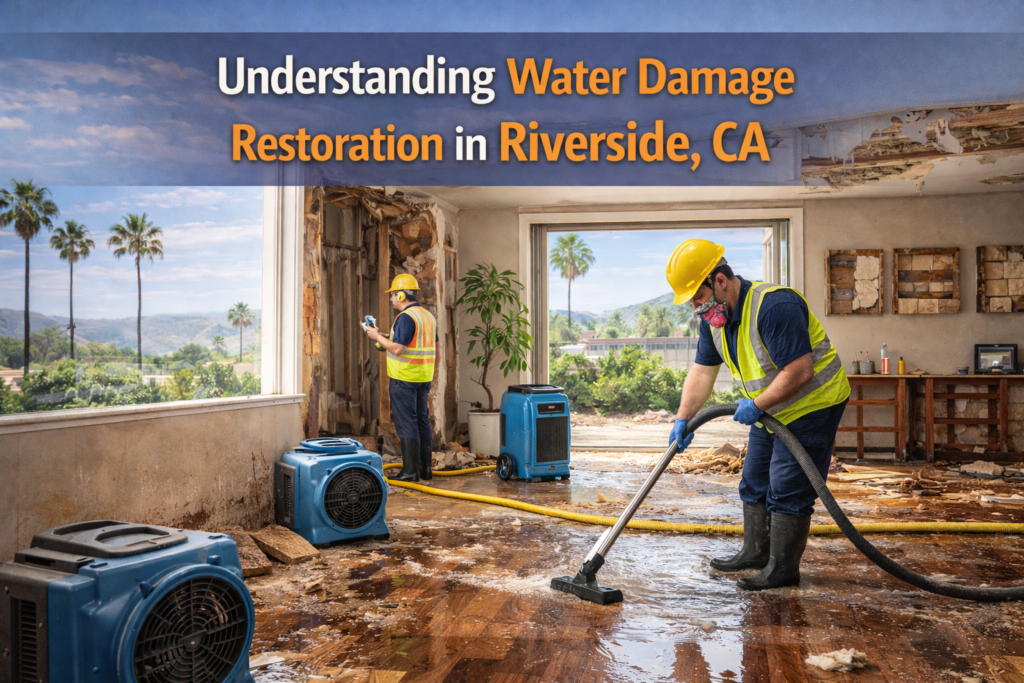
3. Water Extraction Removing standing water is the first physical step in the restoration process. Industrial-grade submersible pumps and wet vacuums are used to extract water quickly and thoroughly. The more efficiently water is extracted, the shorter and more effective the drying phase will be.
4. Drying and Dehumidification After water extraction, significant moisture remains absorbed in building materials. High-speed air movers and industrial dehumidifiers are placed throughout the affected areas to accelerate the evaporation and removal of moisture. Technicians take regular moisture readings to track progress and adjust equipment placement as needed.
5. Cleaning and Sanitisation Once the affected area is dry, cleaning and sanitisation address any dirt, bacteria, or contaminants left behind. This is especially important when the water damage involved sewage or flood water. Antimicrobial and antibacterial treatments are applied to affected surfaces to eliminate health hazards and prevent mould growth.
6. Restoration and Repair The final stage involves repairing or replacing materials that could not be restored damaged drywall, flooring, insulation, or structural components. The goal is to return the property to its pre-loss condition or better.
Why Acting Quickly Matters
The speed of response after water damage has a direct impact on the severity of the outcome. Water moves quickly and spreads beyond the immediately visible area. Within the first few hours, water migrates through walls, into subflooring, and behind cabinetry. Within 24 to 48 hours, mould can begin to colonise moist surfaces, particularly in Riverside’s warm climate.
Delaying professional intervention dramatically increases the scope of damage, the amount of material that must be replaced, and the overall cost of restoration.
The Risk of Mould After Water Damage
Mould is one of the most serious secondary consequences of water damage. Once mould establishes itself in a structure, it can spread through the air and cause both health problems and ongoing structural damage. Mould exposure is associated with respiratory issues, allergic reactions, and other health effects.
Professional water damage restoration addresses both visible and hidden moisture which is why the drying and monitoring phases are so important. A property that appears visually dry on the surface may still harbour moisture deep within walls or under flooring, creating ideal conditions for mould growth if not properly addressed.
Categories of Water Damage
Not all water damage is the same. Restoration professionals classify water damage into three categories based on the level of contamination:
- Category 1 (Clean Water) Water from a sanitary source, such as a broken supply line or overflowing sink. The least hazardous category.
- Category 2 (Grey Water) Water that contains some contaminants, such as water from a dishwasher or washing machine overflow. Requires care during handling.
- Category 3 (Black Water) Highly contaminated water from sewage, flooding, or standing water that has supported microbial growth. Requires protective equipment and specialised remediation protocols.
Understanding which category applies to a water damage situation helps restoration professionals determine the appropriate response and safeguards.
What to Do While Waiting for Professionals
While waiting for a restoration team to arrive, property owners can take a few steps to minimise further damage without putting themselves at risk:
- Turn off the water supply at the main valve if the source is a burst pipe or plumbing failure.
- Avoid contact with contaminated water, particularly if it may involve sewage.
- Remove personal belongings, furniture, and valuables from the affected area if it is safe to do so.
- Do not use electrical appliances in water-damaged areas.
- Document the damage with photographs for insurance purposes.
Water Damage Restoration and Insurance
Many water damage restoration claims are covered by homeowners’ or commercial property insurance, depending on the cause of the damage. Standard policies often cover sudden and accidental water damage from internal sources, while flood damage typically requires a separate flood insurance policy.
Professional restoration companies in Riverside are experienced in working alongside insurance adjusters and can provide the documentation and estimates needed to support a claim.
The Importance of Professional Equipment
One of the clearest distinctions between a professional restoration outcome and a do-it-yourself attempt is the equipment. Consumer-grade fans and dehumidifiers operate at a fraction of the capacity of industrial-grade restoration equipment. Professional drying equipment is designed to penetrate building materials and extract moisture at a rate that consumer equipment cannot match, significantly reducing drying time and preventing secondary damage.
Water Damage Restoration in Riverside, when handled by trained and certified professionals with the right tools, offers the best path to a complete recovery protecting the structural integrity of the property, the health of its occupants, and the long-term value of the investment.